
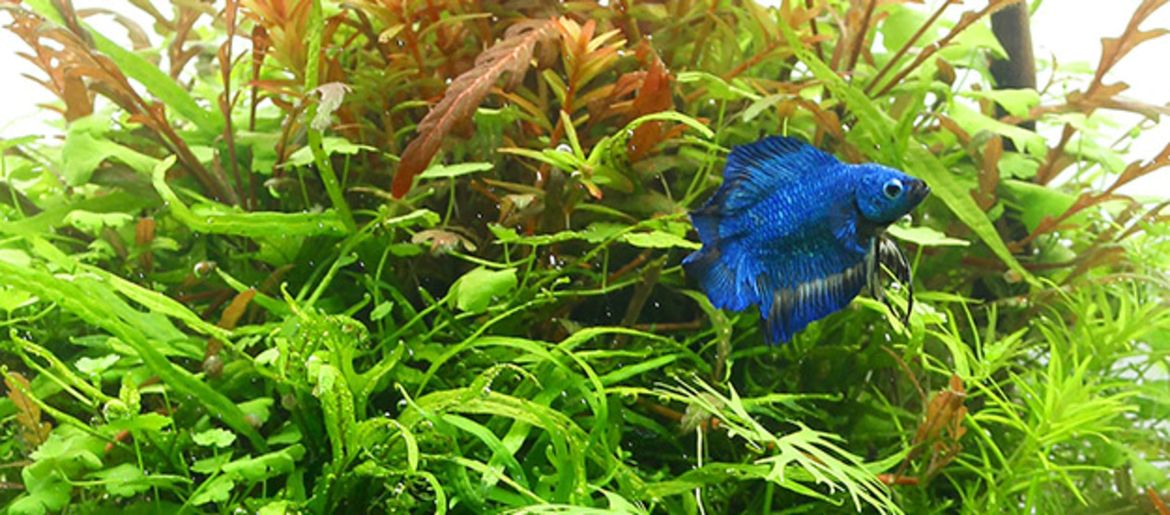
Water Treatment
Water treatment for ornamental fish
Not all tap water is the same. Just because it works well in one aquarium does not mean it will perform equally well in another one in a different area.
What water parameters do fish in an aquarium require?
It is important to take a closer look, as not every fish tolerates every type of water. This becomes particularly relevant when breeding is the goal. With invertebrates such as shrimp, unsuitable water parameters can quickly become critical. Water hardness is only one aspect to consider. Substances such as nitrate or phosphate also play an important role. In some regions, nitrate levels regularly reach the maximum value of 50 mg per litre, which can lead to moulting problems or even death in sensitive shrimp species. Sulawesi shrimp, for example, require specially prepared water simply to survive. Likewise, certain fish species have very specific requirements. Discus do not tolerate hard water well, while cichlids from the African Rift Valley lakes of Tanganyika and Malawi should not be kept in soft, acidic conditions. Soft water is also essential for breeding many characins, even if some species, such as neon tetras, can be kept in harder water.
Adapt the water to the fish, not the other way round
Even if fish or shrimp can tolerate less suitable conditions, it is worth considering whether it is appropriate to keep soft water species in hard water when alternatives are available. One option is to select aquarium inhabitants that match the existing tap water conditions. Another is to adjust the water to meet the needs of the animals. This can be done easily using osmosis water in combination with suitable mineral salts.
Hidden risks in tap water
Even when measurable parameters appear acceptable, tap water can still contain substances that are harmful to aquarium inhabitants. Chlorine, for example, may be added to disinfect water in the event of bacterial contamination. While harmless to humans, it is extremely dangerous for aquarium animals. Shrimp can die within seconds, and fish may suffer severe damage or even perish. Heavy metals such as copper can leach from older pipes and are also highly toxic, particularly for shrimp.
Even if tap water has been used successfully for years, this does not guarantee consistent quality. Water suppliers may introduce disinfectants such as chlorine or silver at short notice. In addition, polyphosphates are sometimes added, which can interfere with reproduction in fish, promote fungal issues in crayfish and contribute to algae growth. For these reasons, many aquarists choose to treat their water and use osmosis systems.
When is water treatment advisable?
Whether treated osmosis water is necessary depends on several factors, including the species being kept and the quality of the local water supply. For more robust species such as Neocaridina shrimp or hardy fish, it may not always be essential. However, many aquarists report noticeable improvements when switching to treated osmosis water. Animals often display better appetite, more vibrant colours, improved reproduction and overall increased vitality.
How does osmosis work?
An osmosis system uses a fine membrane that allows water molecules to pass through while retaining most dissolved substances. The resulting water is highly purified. The Dennerle Osmose Professional 190, for example, has a maximum output of 190 litres per day at 25 degrees Celsius and 4.1 bar pressure. The ratio of osmosis water to residual water ranges from 1:2.5 to 1:4, depending on temperature and pressure. A built-in flush valve helps to extend the lifespan of the membrane by removing deposits and maintaining performance.
For smaller requirements, the Osmose Compact 130 offers a maximum output of 130 litres per day under the same conditions, with a comparable water ratio. A useful tip is that the residual water produced can be reused for purposes such as watering plants.
Can osmosis water be used on its own?
Osmosis water is extremely pure and contains virtually no minerals. Its conductivity is close to zero and it lacks buffering capacity, meaning the pH value can fluctuate significantly depending on environmental factors such as dissolved carbon dioxide. For this reason, pure osmosis water is not suitable for aquarium use. However, it can be adjusted to meet specific requirements by adding mineral salts. The same applies to deionised water, rainwater or very soft spring water.
Which mineral salt is the right choice?
For aquariums with tropical fish and plants, Osmose ReMineral+ from Dennerle is suitable for most applications. It increases total hardness and carbonate hardness in a balanced ratio and stabilises the pH value. One measuring spoon raises total hardness by 2 degrees and carbonate hardness by 1.3 degrees, corresponding to a conductivity of 140 microsiemens per centimetre.
For shrimp, the choice of mineral salt depends on the species. Neocaridina shrimp require harder water with some carbonate hardness. This can be achieved using ShrimpKing Shrimp Salt GH+ KH+, resulting in a pH value of approximately 7 to 7.5. One measuring spoon treats 40 litres of water to a total hardness of 6 to 8 and a carbonate hardness of around 3 to 4.
Species such as bee shrimp, Taiwan shrimp or bumblebee shrimp prefer soft water with no carbonate hardness, particularly when kept on active substrate. For these, ShrimpKing Bee Salt is suitable, producing a pH value of around 6 to 6.5. One level measuring spoon results in a total hardness of 5 to 6 degrees without increasing carbonate hardness, with a conductivity of approximately 250 to 280 microsiemens.
Special shrimp species such as the Sulawesi shrimp Caridina dennerli cannot be kept in untreated tap water. They require very specific conditions similar to their natural habitat. ShrimpKing Sulawesi Salt can be used to achieve a pH value of 7.8 to 8.5 while increasing both total and carbonate hardness. One level measuring spoon per 20 litres raises total hardness to 6 to 7 degrees and conductivity to 270 to 380 microsiemens. If only carbonate hardness needs to be increased in order to stabilise pH, a liquid KH plus product can be used.
Important tips for using mineral salts
Mineral salts should always be dissolved in fresh water before being added to the aquarium. This helps to avoid sudden fluctuations in water parameters, which can be particularly harmful to sensitive shrimp. If some components do not dissolve immediately, they can be added along with the water, as they will dissolve later in the filter. After use, containers should be sealed promptly, as mineral salts absorb moisture from the air and may clump, making them difficult to use.
Additional water treatments
Humin Elixir by Dennerle enriches aquarium water with humic substances that are naturally present in almost all freshwater habitats and are well suited to the needs of fish and invertebrates. These compounds are formed through the breakdown of organic matter and are now recognised for their beneficial effects. They can enhance the overall health of aquatic animals, support the protective function of mucous membranes and assist shrimp during moulting.
Adding Humin Elixir by Dennerle provides targeted support for maintaining the well-being of aquarium inhabitants. Species originating from blackwater environments benefit particularly strongly. This includes discus, angelfish and neon tetras, as well as many South American dwarf cichlids and catfish. Dwarf shrimp also respond positively to humic substances. The formula conditions the water effectively without causing unwanted discolouration.
Dennerle Vital Elixir helps to create a stable and healthy aquarium environment. It contains aloe vera to support mucous membranes and replenishes essential minerals that may be depleted over time, helping to prevent deficiency-related health issues.
For shrimp and crayfish, Nano Crusta Mineral supplies bioactive calcium, magnesium and montmorillonite. It binds harmful substances while providing essential minerals required for shell development.
Enjoy your aquarium!
Latest reviews
-

JBL Zanzibar SNOW, 5kg
- Very fine sand for all aquarium types
- Soil with 0.1-0.6 mm grain size
- For fresh and saltwater and terrariums
-
Seachem Flourite Black Sand, 7 kg
- For planted aquariums
- Not chemically treated or coated
- Doesn't need to be replaced
-
Olibetta Dragon Rocks - 5 KG, 5 kg
- Does not harden the water
- Natural rocks with a fantastic texture
- ideal for planting
-
Olibetta Red Moorwood, L
- Beautiful driftwood - real wood!
- For freshwater aquariums and terrariums
- Rich in fibre, important for catfish and invertebrates
Magazine Articles:
Discover Olibetta:
-
Ireland: Free standard delivery from € 87,90
-
Free
returns -
We operate in a
climate-conscious manner. More than 6.000 products